
The federal Advisory Council on Historic Preservation this summer released a set of proposed changes to rules implementing Section 106 of the National Historic Preservation Act.
If the changes are approved, it could become optional to consult tribes about projects under consideration on culturally significant lands.
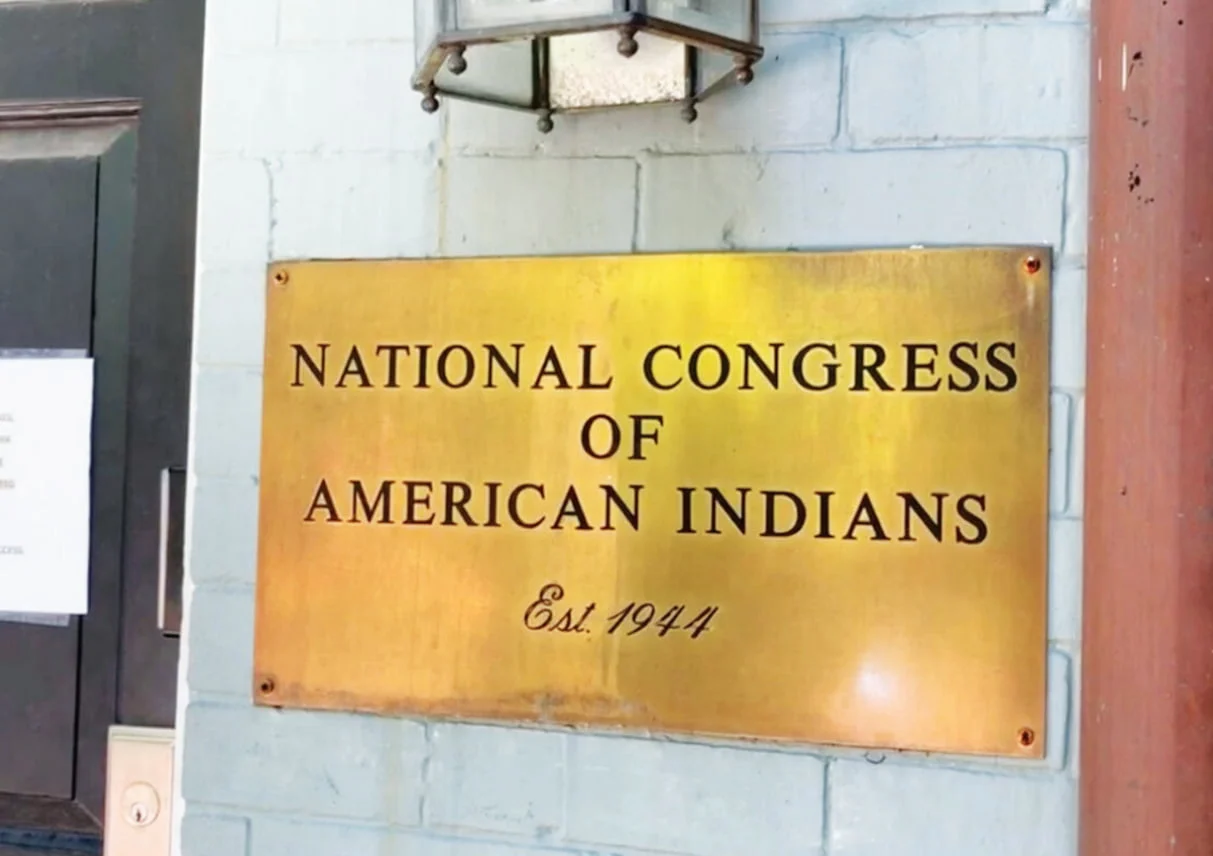
Last month the National Congress of American Indians., the Association on American Indian Affairs, the National Association of Tribal Historic Preservation Officers and partners issued a joint statement opposing the proposed changes.
Section 106 serves as a central legal tool for tribes that guarantees their consultation before ground is broken on projects, helping to minimize harm to places that are sacred and traditional cultural landscapes across the United States.
“We’re talking about living particular relationships,” said Crystal Miller, cultural sovereignty director for the Association on American Indian Affairs, who works closely with the National Congress of American Indians.
“The proposed changes make it easier, across the board for the federal government to treat that living relationship as an inconvenience to be managed rather than a sovereign interest to be honored,” she said.
Other partners discussed the potential impacts of the proposed rule changes on Indian Country and gave tips for how tribal historic preservation officers and tribal leaders can prepare for the upcoming comment period.
The rewrite to Section 106 rules would move tribal consultation from a required step early in project planning to an optional step late in the process. The proposed changes go so far as to remove explicit reference to federal trust responsibility, treaty rights, ancestral and ceded lands and government-to-government relationships.
It would also narrow what is counted as “historic property,” meaning fewer projects would trigger Section 106.
Currently, Section 106 rules require federal agencies to consult with tribes for projects off tribal lands that could affect sites that are significant to Native nations. The proposed changes redefine “historic property” as a physical location that is “geographically compact.” It would specifically exclude “mountains, valleys, bodies of water or landscapes, including ethnographic landscapes.”
“Really, it’s an attack on tribal sovereignty,” said Thierry Veyrié, the culture and heritage director for the Burns Paiute Tribe. “At the end of the day, it’s this colonial society that’s trying to deprive Native people of their Indigenous rights.”
During the webinar on Aug. 19, speakers urged tribal leaders to advocate against the proposed changes. They said legal tools, including templates, briefing papers and talking points, are likely to come out soon to support advocacy efforts.
Currently, the proposed changes are under review by the federal Office of Information and Regulatory Affairs, OIRA, within the Office of Management and Budget.
At this time, ‘interested parties’ can request a meeting with OIRA to express concerns related to the proposed rule. Interested parties include tribal governments, nonprofit organizations, business and trade organizations and state and local governments.